ANT Steel Engineers (Asia) Pvt. Ltd.

Design Of Structure And Civil Foundation For Equipment

Civil and Structural Design:

As a part of Plant Engineering and Consultancy Service, ANT undertakes design and detail drawings for the equipment civil foundations and building structures.

Civil Foundations:

The equipment and building shed civil foundations are designed taking into consideration the following:

  1. Equipment Load Data both static and dynamic:

Foundations are subjected to dead load (self-weight) of the equipment, Live Load – vibrations from the equipment and loads transferred from the superstructure such as shed which have impact on the foundations and ultimately the underneath soil. Types of loads the equipment is subjected to:

1) Static load: The static load of a machine is the overall load it carries. This weight doesn’t change throughout machine usage.

2) Kinetic forces: Kinetic energy refers to the amount of energy an object has due     to its movement. As the equipment moves, it gains energy and creates shocks and vibrations. Kinetic forces vary depending on the type of machine and its power levels.


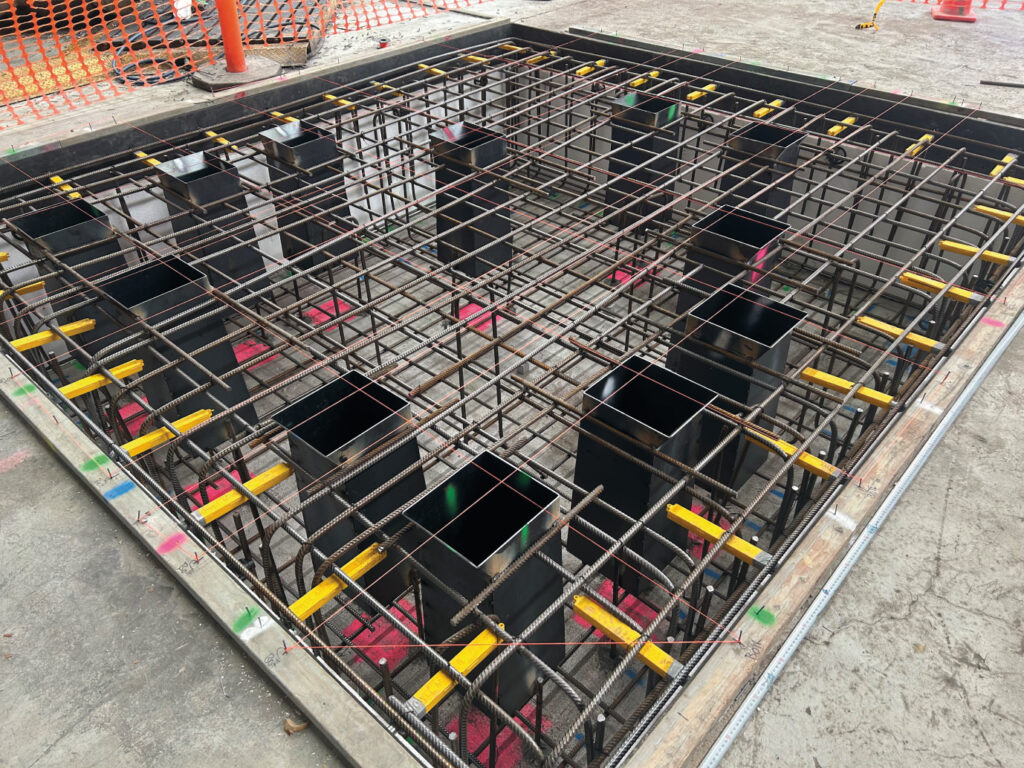
2 .Equipment base including foundation / anchoring bolts and their grouting: The foundations have to be designed to the right proportion of reinforced concrete design mix to withstand the impending loads from the superstructure and equipment operating above foundations.

The design is done as per Indian Standard for Plain and Reinforced Concrete Code of Practice IS 456-2000 reaffirmed 2005. Decision has to be made weather to provide isolated or integrated foundations based on the geotechnical investigation report and design criteria.

3. Geotechnical Investigation Report: A detailed subsoil investigation work is carried out at the project location as requested by the client. It usually consist of field work, laboratory tests and detailed engineering analysis and studies.

  1. Seismic zone category: India is prone to strong earthquake shaking and hence earthquake resistant design is essential. The seismic zone map is classified in seismic zone categories such zone I, zone II, zone III, zone IV respectively. Structures and foundations need to be designed for appropriate earthquake effects as per Indian Standard 1893(Part I) revised 2016 or as per the design code of the country where the project is constructed.

5. Wind, rainfall and dust load: Wind forces and their effects have to be taken into account when considering building components such as structures and their impact on foundations. Static wind method of load estimation which implies the steady wind speed is used for computations as Indian Standard IS 875 (Part 3)-1987 Wind loads.

Foundation drawings are prepared in AutoCAD and also include Bar Bending Schedules, if required by the client.

Types of equipment foundations: There are five general types-

  1. Block-type equipment foundation:Block types use pedestals that rest on footings to build the foundation. This foundation type has a large mass and very little natural frequency.
  2. Box equipment foundation:Box equipment foundations consist of a hollow concrete block. They’re also referred to as caisson-type foundations. A box-type foundation has less mass than a block-type, due to its hollow nature. It also offers a stronger natural frequency.
  3. Wall-type equipment foundation:This foundation option contains two walls and a slab resting on top. Manufacturers design this type for lighter equipment, which sits on top of the slab.
  4. Framed type equipment foundation: Framed equipment foundations have vertical columns with a horizontal frame at the top of each one. This type is usually for big machines, and they sit on horizontal frames.
  5. Flexible type equipment foundation:A flexible foundation has less of a set structure than the other types. Manufacturers can alter the design as needed for different projects.

Plant Building Sheds

Plant Building Sheds are designed based on the plant layout, taking into consideration the following:

  1. Equipment layout
  2. Column to column distances required for accommodating the equipment
  3. Number and width of bays required for smooth and efficient process and material flow
  4. Specifications and load data of material handling equipment like electrically operated overhead travelling (EOT) cranes
  5. Seismic zone category
  6. Wind, rainfall and dust load
  7. Type of sheeting and roof monitors / eves
Scroll to Top